
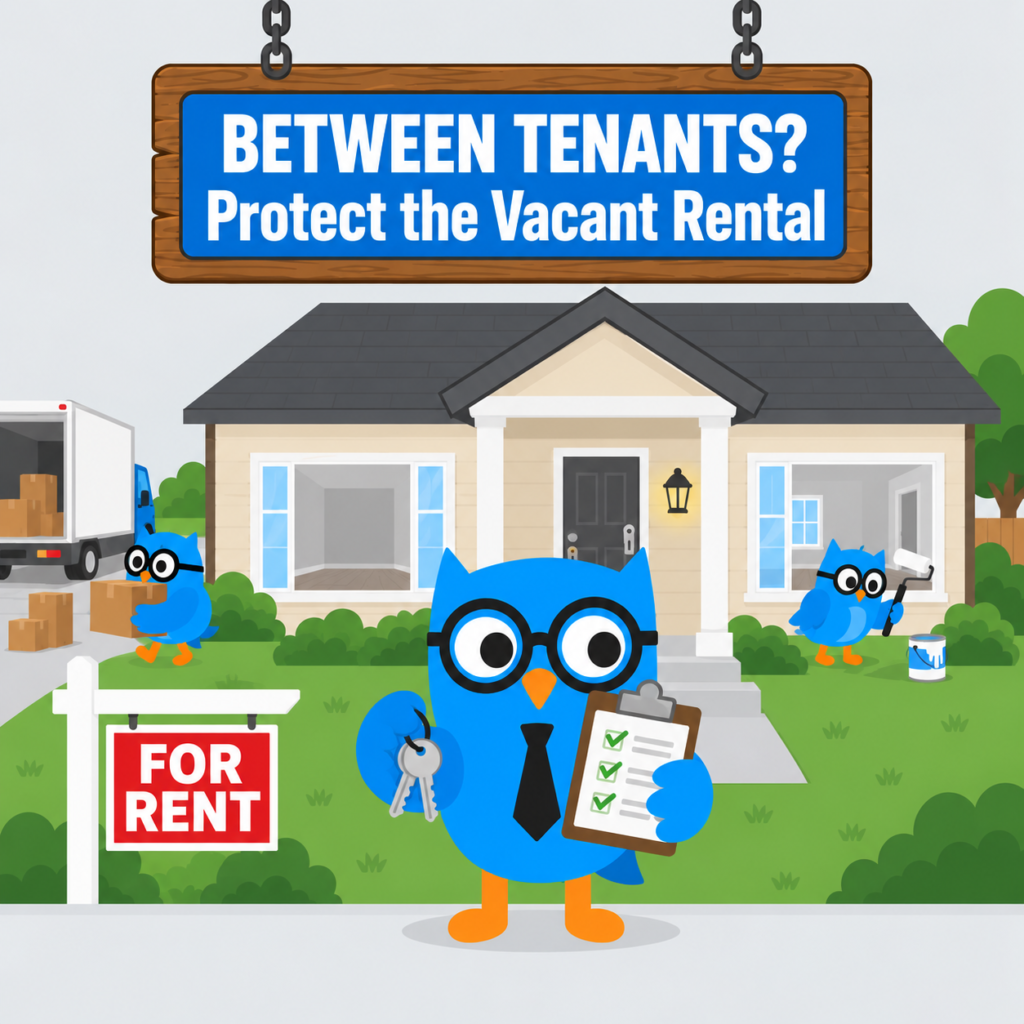
Vacant Home Insurance for Rental Properties Between Tenants
Mr. Hoots explains what landlords and property investors should know when a rental sits empty between tenants and why a longer-than-expected vacancy can change the insurance picture.
Hoo’s there? Mr. Hoots here, watching one tenant hand over the keys while the next one hasn’t even signed a lease yet.
A few empty days between tenants is normal. You clean the property, make repairs, touch up the paint, and get everything ready for the next renter.
But what happens when a few days turn into a few weeks? Or a few months?
An empty rental can create different risks than an occupied one, and your existing landlord insurance may have conditions related to vacancy.
Let’s take a look before that FOR RENT sign starts collecting dust.
Does landlord insurance cover a vacant rental?
It depends on the policy.
Landlord or rental-property insurance is generally designed around a property being used as a rental. A normal turnover period between tenants may be expected, but an extended vacancy can change the risk.
Policies can contain vacancy provisions, conditions, or exclusions that affect coverage after a property has been empty for a certain amount of time.
There is no single vacancy period that applies to every landlord policy.
Hoot tip: If the property is staying empty longer than expected, don’t assume your existing coverage remains unchanged. Check the policy or contact your insurance professional.
Why would a rental stay vacant longer than expected?
Sometimes the next tenant simply takes longer to find.
Other times, vacancy is intentional.
A rental might sit empty because:
- You’re making repairs or improvements
- A previous tenant left significant damage
- You’re waiting for a qualified applicant
- The property is being prepared for sale
- You’re repositioning or renovating an investment property
- A new tenant’s move-in date was delayed
- Local rental demand is slower than expected
The reason matters because an empty property being cleaned for a week can present a very different risk from one undergoing months of renovation.
What risks increase between tenants?
When tenants are living in the property, somebody is usually there to notice a problem.
Between tenants, a leaking pipe, broken window, or damaged roof could go unnoticed until the landlord, property manager, or contractor visits again.
Vacant rentals can face risks such as:
- Theft
- Vandalism
- Water damage
- Fire
- Unauthorized entry
- Weather-related damage
- Liability incidents
- Damage that goes unnoticed for an extended period
Even a well-maintained rental can develop a problem while nobody is home.
What if you’re making repairs before the next tenant?
Turnovers are a great time to fix things.
Paint, flooring, fixtures, appliances, and minor repairs may all be part of getting the property rent-ready.
But if the project grows from a simple turnover into a significant renovation, tell your insurance professional.
Major construction, structural changes, extensive demolition, or other substantial work can create exposures that may require different insurance considerations.
The question isn’t just “Is the house vacant?”
It’s also “What’s happening while it’s vacant?”
Don’t forget about appliances and materials
An empty rental may still contain plenty worth stealing.
Refrigerators, ranges, HVAC equipment, fixtures, copper components, new flooring, cabinets, and building materials can all have value.
If you’re storing new materials or appliances at the property before a tenant moves in, review whether and how those items are covered under your policy.
A locked front door is important, but it isn’t an insurance policy.
Property managers should know too
If you use a property manager, make sure there is a clear process for vacant units.
Who inspects the property?
Who handles a broken window?
Who checks for leaks?
Who collects mail or notices?
Who contacts you if the vacancy extends longer than planned?
Insurance can help with covered losses, but regular property checks can catch small problems before they become expensive ones.
Before the next tenant moves in
Use the vacancy period to give the property a quick risk check:
- Inspect plumbing for leaks
- Test smoke and carbon monoxide alarms as applicable
- Check doors, windows, and locks
- Inspect the roof and exterior for visible damage
- Remove mail, flyers, and packages
- Maintain the lawn and landscaping
- Confirm utilities are being managed appropriately
- Keep records of repairs and inspections
- Review your insurance if the vacancy is becoming extended
Then you can hand over the keys knowing the property has been looked after.
Mr. Hoots’ Bottom Line
A vacant rental isn’t necessarily a problem. It’s part of being a landlord.
The problem is assuming a short turnover will stay short.
If your rental remains empty longer than expected, or the work you’re doing at the property changes significantly, make sure your insurance still matches the situation.
Protect the Property. Protect the Investment. Because between one set of keys and the next, the property is still yours to protect.
-Mr. Hoots
Share this post.
Know a landlord or property investor with a rental sitting between tenants? Send this their way before a short vacancy turns into a long one.
Get Your Instant Quote Now
Have a rental property sitting vacant between tenants? My Vacant Guard makes it easy to get an instant quote for eligible vacant properties online.
Quote. Bind. Covered.