
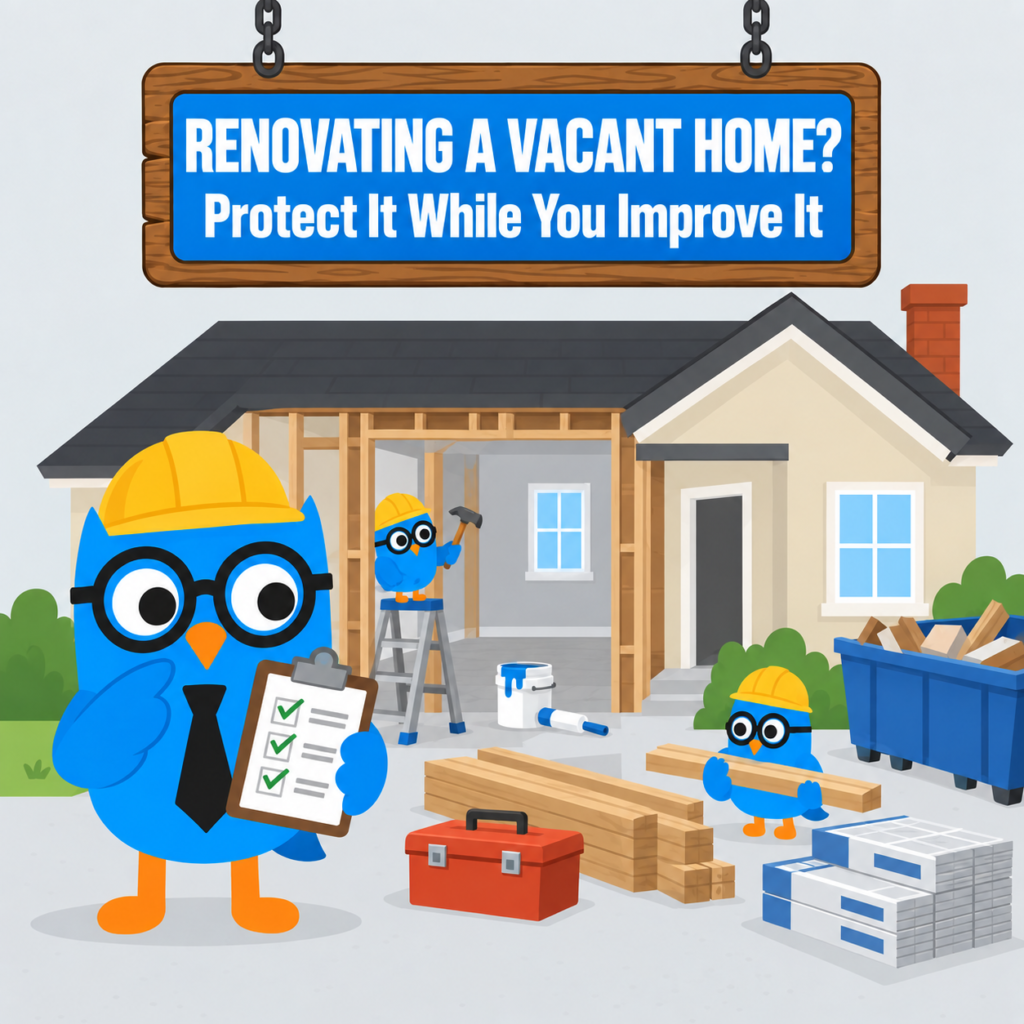
Vacant Home Insurance During Renovations: What Property Owners Need to Know
Mr. Hoots explains why renovating an empty property can change the insurance picture and why the scope of your project matters before the first hammer swings.
Hoo’s there? Mr. Hoots here, hard hat on and clipboard ready.
Buying a vacant property to renovate can be a great investment. Maybe you’re updating a rental before the next tenant moves in. Maybe you bought a fixer-upper to resell. Or maybe you’re renovating an inherited property before putting it on the market.
But once contractors, construction materials, open walls, and major repairs enter the picture, you are dealing with more than just an empty house.
You’re dealing with a vacant property under renovation, and that can change the type of insurance protection you need.
Let’s take a look before the demo crew gets started.
Does vacant home insurance cover renovations?
It can, depending on the policy and the extent of the work.
Some vacant property insurance programs may allow certain renovations, repairs, or improvements. But that does not mean every type of construction project is automatically covered.
Painting walls and replacing flooring is very different from removing a roof, changing the structure, or gutting an entire house.
The more extensive the renovation, the more important it becomes to make sure your insurer understands exactly what is happening at the property.
Hoot tip: Don’t describe a major renovation as “just doing a little work.” Give your insurance professional an accurate picture of the project.
Minor renovation or major construction?
Not every renovation creates the same level of risk.
A property getting cosmetic updates might involve:
- Interior painting
- New flooring
- Cabinet replacement
- Updated fixtures
- Minor repairs
- Landscaping improvements
A major renovation could involve things like structural changes, significant electrical or plumbing work, additions, roof replacement, extensive demolition, or portions of the building being opened to the elements.
That distinction can affect which insurance product is appropriate.
Why renovations create additional risks
A vacant house already has the problem of nobody being there to notice something going wrong.
Construction adds another layer.
Now you may have contractors entering the property, temporary electrical connections, exposed plumbing, building materials stored on-site, dumpsters outside, partially completed work, and doors opening throughout the day.
Potential losses can include:
- Fire
- Water damage
- Theft of materials or appliances
- Vandalism
- Weather entering unfinished portions of the property
- Accidental property damage
- Injuries occurring on the premises
The property may be getting better every day, but during construction, its risk profile can temporarily become more complicated.
What about tools and building materials?
A stack of new flooring, appliances, cabinets, copper piping, or other materials can be attractive to thieves, especially when the property is obviously vacant.
Coverage for materials, supplies, appliances, and contractors’ tools can vary significantly depending on the policy and who owns the property.
Your contractor should have appropriate insurance for their business and equipment, but don’t assume their policy protects everything stored at your property.
Ask before materials start piling up.
Should you check your contractor’s insurance?
Absolutely.
Before allowing a contractor to begin work, ask for a current Certificate of Insurance and review the insurance requirements in your contract.
Depending on the project, contractors may carry coverage such as:
- General Liability
- Workers’ Compensation where applicable
- Commercial Auto
- Other coverage appropriate to their operations
A certificate is evidence of insurance at the time it is issued, but it is not the insurance policy itself and does not automatically guarantee coverage for every situation.
For larger renovations, discussing insurance requirements before signing the construction contract can save headaches later.
What about Builder’s Risk insurance?
For significant renovation or construction projects, Builder’s Risk may enter the conversation.
Builder’s Risk is designed to protect property during construction, but policies vary considerably in what they cover, who should purchase them, and when coverage begins and ends.
Depending on the project and contract, the property owner, general contractor, or another party may be responsible for obtaining the coverage.
A simple cosmetic renovation may not require the same solution as a major rehabilitation project.
The key is matching the insurance to the actual work being performed.
Don’t forget about permits and inspections
Insurance isn’t the only paperwork that matters.
Depending on the location and scope of the project, permits and inspections may be required for electrical, plumbing, structural, roofing, HVAC, or other work.
Using appropriately licensed contractors and following applicable building requirements can help prevent both construction problems and insurance complications.
Mr. Hoots likes paperwork almost as much as he likes keeping watch. Almost.
Before renovations begin
Before the first contractor arrives, make sure you understand:
- How your property is currently insured
- Whether the insurer knows the property is vacant
- Whether renovations are permitted under the policy
- What type of work will be performed
- How long the project is expected to take
- Whether materials stored at the property are covered
- Whether additional construction coverage may be necessary
- What insurance your contractors carry
The time to answer those questions is before something goes wrong.
Mr. Hoots’ Bottom Line
Renovating a vacant property can turn an empty house into a valuable investment, but construction changes the risk.
A fresh coat of paint and new flooring are one thing. Major demolition and structural work are another.
Make sure your insurance provider knows the property is vacant and understands the renovation plan. The right coverage should match the property you have today, not just the property you’re hoping to have when construction is finished.
Protect the Property. Protect the Investment. Because your renovation budget should go toward improving the house, not paying for an uncovered surprise.
-Mr. Hoots
Share this post.
Know an investor, landlord, or homeowner renovating an empty property? Send this their way before the work begins.
Get Your Instant Quote Now
Renovating a vacant property? My Vacant Guard makes it easy to explore coverage designed for eligible vacant properties and renovation situations.
Protect the Property. Protect the Investment.