
Vacant Home Insurance When Selling a House: What Happens After You Move Out?
Mr. Hoots explains what can happen to your insurance when you move before your house sells and the property is left sitting empty.
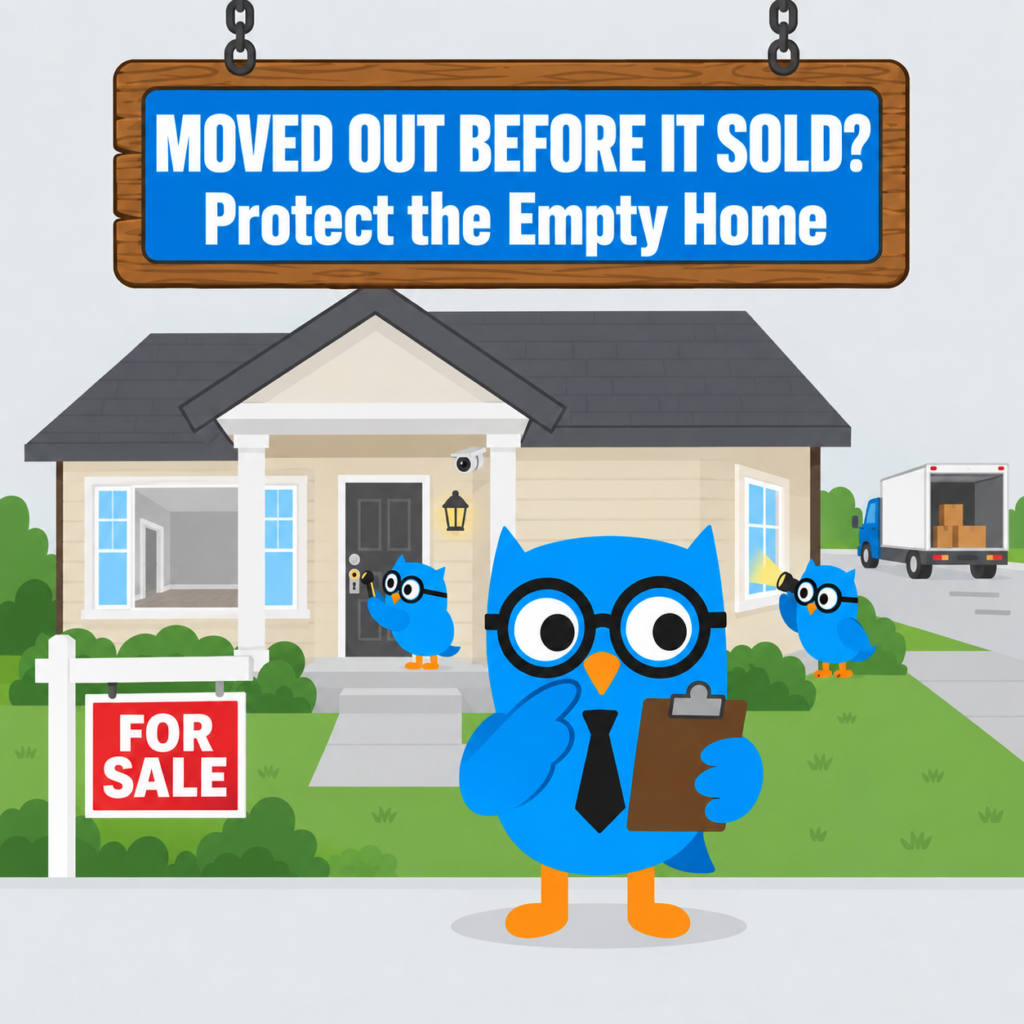
Hoo’s there? Mr. Hoots here, watching the moving truck pull away while the FOR SALE sign stays firmly planted in the front yard.
You found your next home. The furniture is gone. The boxes are unpacked at the new place.
There’s just one problem.
The old house hasn’t sold yet.
This happens every day, but once you move out, the insurance situation at the property can change. Your homeowners policy was written for a home you lived in. Now you have an empty property waiting for a buyer.
Here’s what you should know while you wait for that SOLD sign.
Does homeowners insurance continue after you move out?
Your homeowners policy does not necessarily disappear the moment the moving truck leaves.
But moving out permanently is an important change in occupancy.
Homeowners policies are generally designed for residences that are occupied by the insured. If the house becomes vacant, provisions within the policy may eventually restrict or exclude certain coverage.
Exactly when and how that happens depends on your policy.
Hoot tip: Don’t assume you’re protected simply because the homeowners premium is still being paid.
What makes a home for sale “vacant”?
Putting a house on the market does not automatically make it vacant.
The condition of the property matters.
If you’ve moved out but left furniture and belongings behind, the property might be considered unoccupied rather than vacant depending on the policy.
If you’ve completely moved out and the house is substantially empty, it may meet the insurer’s definition of vacancy.
That distinction is one reason it’s important to tell your insurance professional what is actually happening at the property.
What if you expect the house to sell quickly?
Maybe you’ve already received offers and expect to close within a few weeks.
That’s great.
But real estate transactions do not always follow the schedule you expect.
Inspections uncover problems. Buyers lose financing. Appraisals come in low. Closing dates get pushed back. Sometimes the deal falls apart completely.
A property you expected to be empty for two weeks can easily remain vacant much longer.
Don’t base your insurance decision solely on how quickly you think the house will sell.
What risks does an empty home face while it’s listed?
The house may look beautiful in the listing photos, but nobody is there every night to notice when something goes wrong.
Potential risks include:
- Water leaks
- Fire
- Theft
- Vandalism
- Storm damage
- Broken windows
- Unauthorized entry
- Liability incidents on the property
There is another consideration too: people may still be entering the home.
Real estate agents, prospective buyers, inspectors, appraisers, contractors, cleaners, and photographers could all visit while the property is empty.
Vacant does not necessarily mean nobody ever steps inside.
Should you turn off the utilities?
Be careful before shutting everything down.
Turning off certain utilities may make sense in some situations, but doing so can also create problems depending on the property, season, climate, and policy requirements.
For example, shutting off heat in cold weather could increase the risk of frozen pipes.
If you’re considering winterizing a property or shutting down utilities, make sure you understand both the maintenance consequences and any requirements in your insurance policy.
Keep the house looking occupied
An empty house does not need to advertise that it’s empty.
Simple property-management steps can make a difference:
- Maintain the lawn and landscaping
- Remove mail and packages
- Use exterior lighting
- Secure doors and windows
- Repair visible damage quickly
- Consider timers for interior lights
- Use cameras or monitored security where appropriate
- Have someone inspect the property regularly
You want buyers to notice the FOR SALE sign, not signs that nobody is keeping watch.
What happens when the house finally sells?
Your responsibility for insuring the property generally continues until ownership transfers according to the transaction.
Don’t cancel coverage simply because you accepted an offer or signed a contract.
A lot can happen between UNDER CONTRACT and SOLD.
Coordinate the timing of any insurance changes with the closing so you don’t accidentally create a gap before ownership officially changes hands.
Mr. Hoots’ Bottom Line
Moving out does not mean you stop owning the house, and it certainly does not mean the property stops facing risk.
If your old home will sit empty while you wait for a buyer, review your insurance as soon as the occupancy changes.
Hopefully the FOR SALE sign becomes a SOLD sign quickly.
Until then, Mr. Hoots says keep the property protected.
Protect the Property. Protect the Investment. Because you haven’t finished protecting your old home until you’ve handed over the keys.
-Mr. Hoots
Share this post.
Know someone who moved before their old house sold? Send this their way before an empty home creates an unexpected insurance problem.
Get Your Instant Quote Now
Already moved out while your property waits for a buyer? My Vacant Guard makes it easy to get an instant quote for eligible vacant properties online.
Quote. Bind. Covered.