
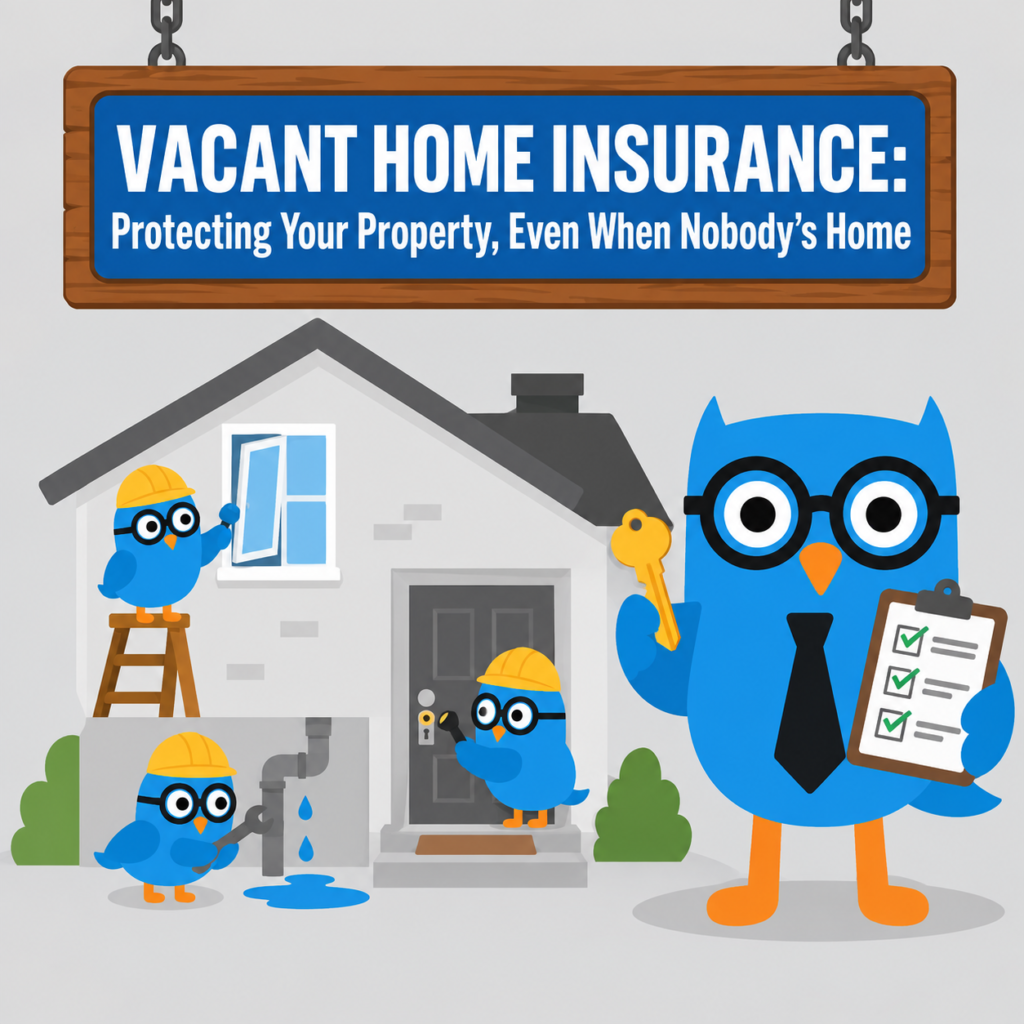
Vacant Home Insurance: Why Your Regular Homeowners Policy May Not Be Enough
Mr. Hoots explains what changes when a home becomes vacant and why the right coverage matters when nobody is there to keep watch.
Hoo’s there? Mr. Hoots here, keeping an eye on the house while nobody’s home.
Maybe you moved before your old house sold. Maybe you inherited a property, bought a fixer-upper, or have a rental sitting between tenants. Whatever the reason, once a home sits vacant, the insurance conversation can change.
An empty property faces risks that an occupied home simply does not. A small leak can go unnoticed for days. A broken window may not get reported. And if someone realizes nobody is living there, theft and vandalism can become a much bigger concern.
Let’s take a look at why vacant properties need a different kind of protection.
When is a property considered vacant?
- Vacant and unoccupied do not always mean exactly the same thing.
- An unoccupied home may still contain furniture and belongings but nobody is currently living there. A vacant home is generally one that is substantially empty and not being used as a residence.
- Exactly how an insurance company defines vacancy can vary by policy, which is why it is important to review your coverage when occupancy changes.
Why vacant homes have different risks
When nobody is regularly at the property, problems can become much more expensive before anyone notices them.
Common risks include:
- Theft or vandalism
- Fire
- Water damage
- Weather-related damage
- Broken windows or forced entry
- Liability if someone is injured on the property
- Damage that goes unnoticed because nobody is there
A leaking pipe is bad enough when you discover it that afternoon. Finding it weeks later is an entirely different problem.
Does homeowners insurance cover a vacant house?
This is where property owners can get caught off guard.
A standard homeowners policy is designed primarily for an occupied residence. Policies can contain vacancy provisions that restrict or exclude certain coverage after a property has been vacant for a specified period.
That means simply keeping the old homeowners policy active does not necessarily mean the property has the protection you think it does.
Hoot tip: If the occupancy of the property changes, tell your insurance professional. Do not wait until there is a claim to find out how your policy defines vacancy.
Who typically needs vacant property insurance?
Vacant property coverage is not just for abandoned houses. It can make sense in many everyday situations:
- A home listed for sale after the owner has moved
- A rental property between tenants
- A newly purchased investment property awaiting renovation
- A property undergoing repairs or improvements
- An inherited home going through an estate
- A foreclosure or REO property
- A seasonal or temporarily unused property, depending on the circumstances
The reason the property is vacant matters because the risks and appropriate coverage can differ.
What should vacant property insurance protect?
Coverage varies by policy and carrier, but depending on the policy selected, protection may be available for risks such as:
- Fire
- Wind or storm damage
- Vandalism
- Theft Certain water-related losses
- Premises liability
- Other covered property damage
Always review the actual policy terms, limits, deductibles, conditions, and exclusions. Vacant property policies are not all built the same.
Vacant property mistakes to avoid
A few assumptions can become expensive:
- Assuming your existing homeowners policy automatically covers vacancy
- Waiting until renovations begin to discuss the change in risk
- Failing to tell the insurer that tenants moved out
- Leaving the property unsecured
- Ignoring small maintenance problems because nobody lives there
- Choosing coverage based only on price instead of what is actually protected
The house may be empty, but the risk certainly is not.
Quick ways to protect a vacant property
Insurance is only part of the equation. Good property management matters too.
- Inspect the property regularly
- Keep doors and windows secured
- Maintain exterior lighting
- Remove mail, packages, and other signs that nobody is around
- Maintain heating or winterize plumbing when appropriate
- Keep landscaping maintained
- Repair broken windows, locks, or exterior damage quickly Consider alarms, cameras, or monitored security
Making a property look occupied and cared for can help discourage unwanted visitors and catch problems earlier.
Mr. Hoots’ Bottom Line
A vacant house does not stop needing protection just because nobody is living there. In fact, that is often when keeping a close eye on the property matters most.
Whether you are selling, renovating, investing, handling an estate, or waiting for the next tenant, make sure the insurance protecting the property actually matches how the property is being used.
Protect the Property. Protect the Investment. Because an empty house should never mean an empty safety net.
-Mr. Hoots
Share this post.
Know someone with an empty home, investment property, or house under renovation? Send this their way.
Get your vacant property quote
Protect your property while it is vacant with coverage designed for the risks that come with an unoccupied home.