
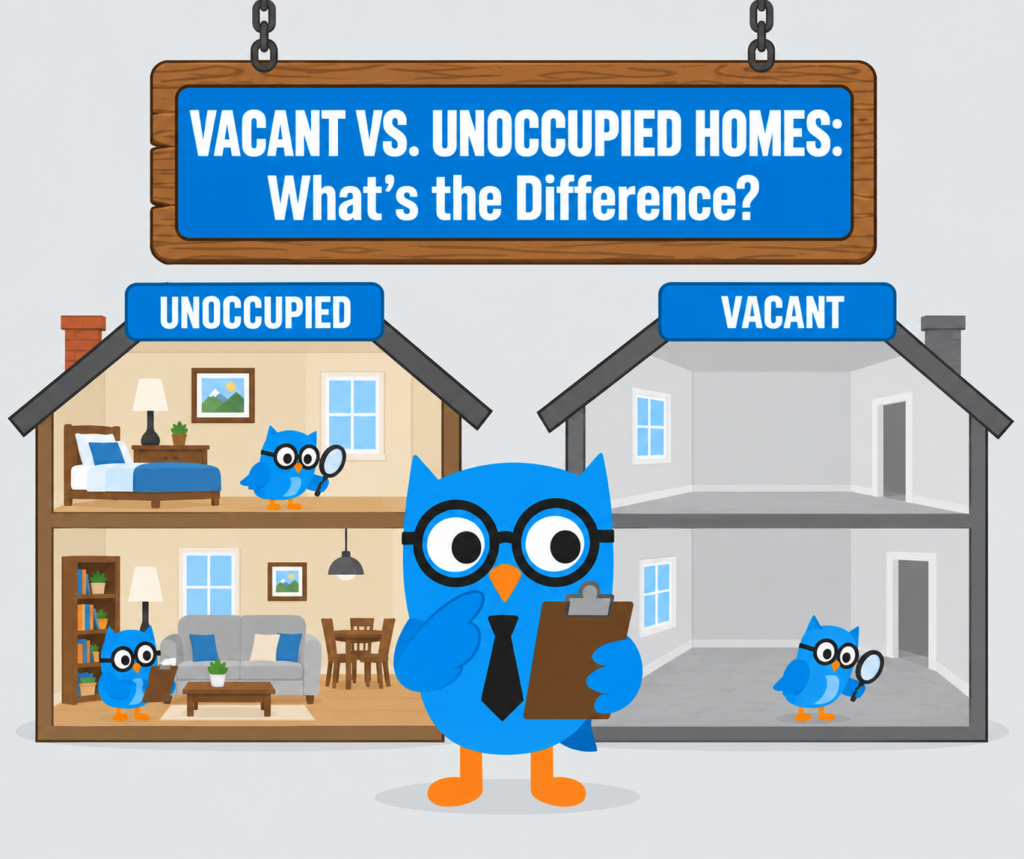
Vacant vs. Unoccupied Homes: What’s the Difference for Insurance?
Mr. Hoots explains why an empty house and a vacant house are not always the same thing, and why that difference can matter when it comes to insurance.
Hoo’s there? Mr. Hoots here, keeping an eye on the house while nobody’s home.
Hoo’s there? Mr. Hoots here, checking in on a house where the lights are off and nobody seems to be home.
But here’s the question: Is the property vacant, or is it simply unoccupied?
They might sound like two ways of saying the same thing, but in insurance, the distinction can matter. A furnished home waiting for its owner to return is very different from an empty property waiting to be sold, renovated, or occupied by a new tenant.
Let’s clear up the confusion.
What does “unoccupied” mean?
An unoccupied property generally still looks and functions like a home. The furniture may still be there, the utilities may be running, and the owner intends to return, but nobody is currently living there.
Some common examples include:
- You’re traveling for an extended period
- You’re temporarily living somewhere else
- You’re between moves but your belongings remain
- You’re spending part of the year at another residence
The property may be empty of people, but it has not necessarily stopped functioning as a residence.
What does “vacant” mean?
A vacant property is generally a home that is substantially empty and is no longer being regularly occupied as a residence.
That might happen because:
- You moved out before the house sold
- A tenant moved out and the property is awaiting another renter
- You purchased a fixer-upper before renovations begin
- You inherited a home you do not plan to occupy
- A property is being held for sale or investment
- A renovation leaves the home without the contents or conditions necessary for normal occupancy
The exact definition of “vacant” can vary by insurance policy, so always check the actual policy language.
Why does the difference matter to an insurance company?
An occupied home has someone around to notice when something goes wrong.
A vacant property does not.
A small leak might be discovered within minutes in an occupied home. In a vacant property, it could continue for days. A broken window might immediately get repaired at your primary residence, while the same damage at an empty investment property could go unnoticed.
Vacancy can increase exposure to:
- Theft
- Vandalism
- Fire
- Water damage
- Unauthorized entry
- Weather damage that goes unnoticed
- Liability issues on the premises
Hoot tip: The house may be quiet, but the risks certainly aren’t.pen fast and often. Solid coverage keeps those risks from hitting your wallet.
When can homeowners insurance become an issue?
Standard homeowners insurance is primarily designed around an occupied residence.
Policies can contain conditions or exclusions related to vacancy, and certain protections may change after a property has been vacant for a specified period.
That is why you should not assume that simply continuing to pay the existing homeowners premium means everything remains covered exactly as it was before.
If the occupancy changes, talk to your insurance professional about it.
What if the property is only vacant temporarily?
Temporary vacancy is extremely common.
Maybe the house is on the market for two months. Maybe you’re renovating it before renting it. Maybe you inherited it and need time to decide what to do next.
That does not mean you should ignore the insurance question.
Vacant property insurance can be designed for situations where a property needs protection during a transitional period rather than as a permanent residence.
What about a rental between tenants?
This is another situation where the details matter.
A rental sitting empty for a short period between tenants is not necessarily treated the same way under every policy. The length of vacancy, condition of the property, renovation activity, and terms of the existing policy can all matter.
Before assuming your landlord policy handles the situation, verify how vacancy is addressed.
Quick ways to protect an empty property
Whether the home is technically vacant or simply unoccupied, a few precautions can help reduce risk:
- Inspect the property regularly
- Keep doors and windows locked
- Maintain exterior lighting
- Keep landscaping maintained
- Remove mail and packages
- Address leaks and maintenance issues quickly
- Maintain utilities when appropriate
- Consider cameras or monitored security
- Make sure someone can respond quickly if there is a problem
Insurance protects against covered losses. Good property management can help prevent those losses from happening in the first place.
Mr. Hoots’ Bottom Line
“Nobody lives there right now” does not tell the whole story.
A home can be unoccupied without necessarily being vacant, and insurance policies may treat those situations differently. If you’ve moved out, lost a tenant, inherited a property, started renovations, or are waiting for a sale, make sure your coverage matches what is actually happening at the property.
Protect the Property. Protect the Investment. Because when nobody’s home, somebody still needs to keep watch.
-Mr. Hoots
Share this post.
Know someone with a property sitting empty? Send this their way before they assume their existing insurance has everything covered.
Get your vacant property quote.
If your property is vacant, between tenants, under renovation, or waiting to be sold, My Vacant Guard can help you find coverage designed for the situation.