
Vacant Property Insurance for Property Managers: Protecting Homes Between Occupants
Mr. Hoots explains what property managers should watch for when a home becomes vacant and why managing the insurance transition matters just as much as managing the property.
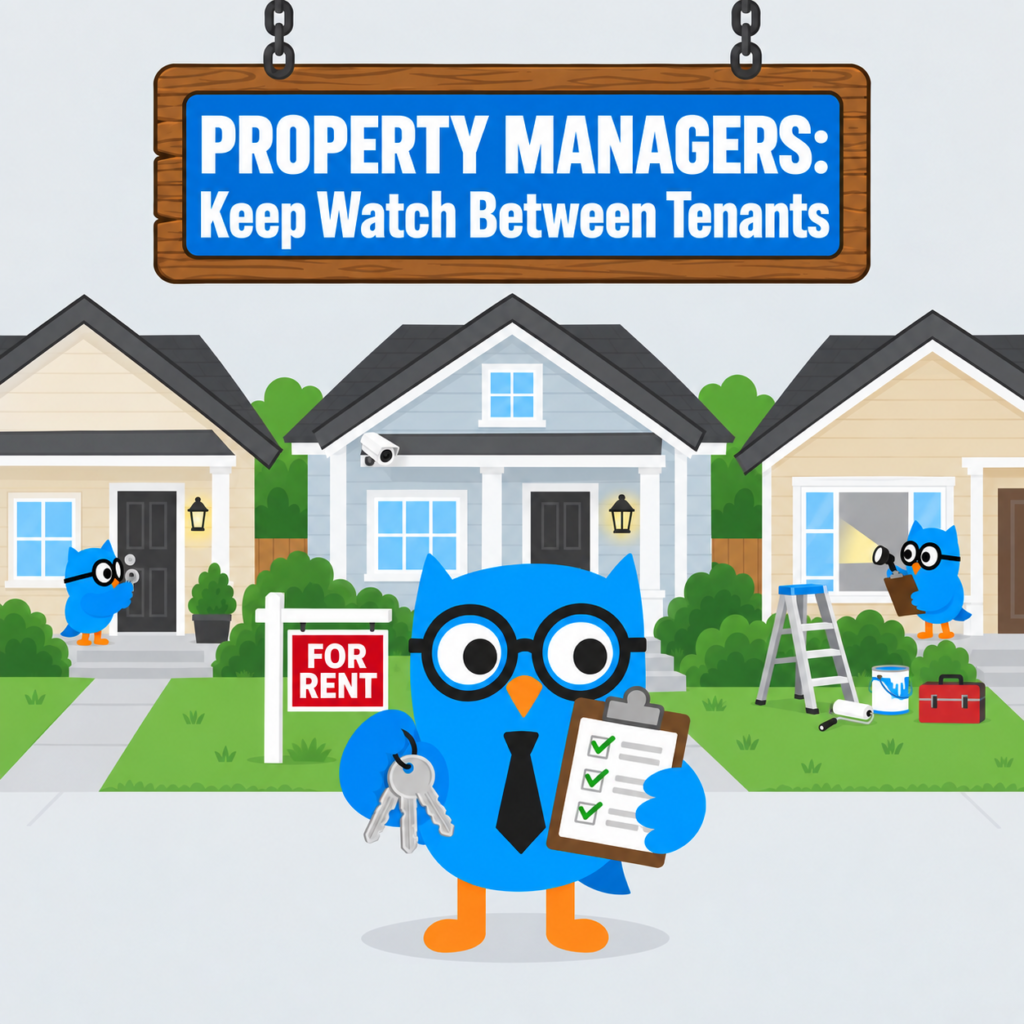
Hoo’s there? Mr. Hoots here, clipboard in one wing and a whole lot of keys in the other.
Property managers are used to keeping track of tenants, maintenance requests, inspections, vendors, leases, and more properties than most people would want to count.
But when a tenant moves out, another item needs to go on the checklist:
What happens to the property’s insurance while nobody lives there?
A vacant property may only stay empty for a couple of weeks. Or a delayed tenant, renovation, repair, or change in ownership could leave it vacant much longer.
Either way, the property still needs protection.
Why vacancy matters for property managers
Vacancy is a normal part of managing rental properties.
The problem is that nobody always knows how long it will last.
A tenant moves out on Friday. Cleaning starts Monday. Repairs are scheduled for Wednesday. The new tenant is supposed to move in two weeks later.
Then the contractor gets delayed.
The applicant backs out.
A repair becomes a renovation.
Suddenly, the property has been empty much longer than anyone expected.
That’s when having a process for vacant properties becomes important.
Does the owner’s landlord policy still apply?
It may, but don’t assume nothing changes.
Landlord and rental-property policies can contain provisions related to vacancy. The definition of vacancy and any resulting coverage changes depend on the individual policy.
A short, routine turnover between tenants may be treated differently from an extended vacancy.
If a property is going to remain empty longer than expected, the owner should review the insurance situation with their insurance professional.
Hoot tip: “We’re looking for another tenant” doesn’t necessarily answer the insurance question.
Property managers can be the first to spot a problem
One advantage property managers have is visibility.
You’re often the person who knows when a tenant actually leaves, when repairs begin, when a new lease falls through, and when an expected two-week vacancy becomes two months.
That information matters.
Creating a process for tracking vacant properties can help owners address insurance questions before they become claim problems.
Build vacancy into the turnover checklist
When a tenant moves out, consider adding a vacancy checklist to your normal turnover process.
Track items such as:
- Date the tenant moved out
- Date the property was last occupied
- Expected next tenant move-in date
- Current property condition
- Repairs or renovations underway
- Contractors accessing the property
- Utility status
- Security measures
- Inspection dates
- Insurance review status
The goal isn’t to create more paperwork for the sake of paperwork.
It’s to know exactly what is happening at every property you manage.
Mr. Hoots appreciates a good checklist. Especially one with boxes he can actually check.
How often should a vacant property be inspected?
There is no universal inspection schedule that works for every property or policy.
Insurance policies may have specific requirements, and owners should follow those requirements when applicable.
From a property-management perspective, regular inspections can help identify problems such as:
- Plumbing leaks
- Broken windows
- Roof or storm damage
- Unauthorized entry
- HVAC problems
- Mail or packages accumulating
- Landscaping issues
- Signs of vandalism
- Doors or windows that aren’t properly secured
A five-minute inspection can sometimes prevent a small problem from becoming a very expensive one.
What if repairs are happening between tenants?
Normal turnover work is common.
Painting, cleaning, replacing flooring, repairing fixtures, and handling routine maintenance may all happen before the next tenant moves in.
But if the scope of work grows substantially, the insurance conversation may need to change too.
Major renovations, structural changes, extensive demolition, roofing work, or significant electrical and plumbing projects can create different exposures.
Make sure the property owner and insurance professional understand what work is actually taking place.
Keep contractors organized too
Property managers often coordinate vendors and contractors on behalf of owners.
Before work begins, maintain appropriate documentation from the contractors being used, including Certificates of Insurance when required.
Depending on the contractor and work performed, relevant coverage may include General Liability, Workers’ Compensation where applicable, Commercial Auto, and other insurance appropriate to their operations.
The contractor’s insurance and the property owner’s insurance serve different purposes.
Both matter.
Security becomes more important when nobody’s home
An empty rental can become obvious surprisingly quickly.
Mail accumulates. Lights stay off. The lawn grows. Nobody moves the trash cans.
Keeping the property maintained can help reduce those signals.
Consider appropriate measures such as:
- Securing doors and windows
- Changing or rekeying locks after tenant turnover
- Maintaining exterior lighting
- Removing mail and packages
- Keeping landscaping maintained
- Using cameras or security systems where appropriate
- Controlling contractor and vendor access
- Documenting regular property inspections
The goal is simple: even when the house is empty, it should never look forgotten.
Communication with the property owner matters
Property managers manage the property, but the owner typically has responsibility for maintaining appropriate property insurance.
That makes communication important.
If the vacancy is extending longer than expected, renovation plans change, significant damage is discovered, or the intended use of the property changes, make sure the owner knows.
Don’t assume they already do.
Mr. Hoots’ Bottom Line
Property managers already track a lot of moving pieces.
Vacancy should be one of them.
Knowing when a property became empty, how long it has been vacant, what’s happening inside it, and when the next occupant is expected can help owners make better insurance decisions.
A vacant property might not have a tenant calling about problems.
That doesn’t mean the problems stopped.
Protect the Property. Protect the Investment. Because good property management doesn’t stop when the tenant moves out.
-Mr. Hoots
Share this post.
Know a property manager, landlord, or real estate investor responsible for vacant rentals? Send this their way and make vacancy part of the turnover checklist.
Get Your Instant Quote Now
Managing a property that’s sitting vacant? My Vacant Guard makes it easy to get an instant quote for eligible vacant properties online.
Quote. Bind. Covered.