
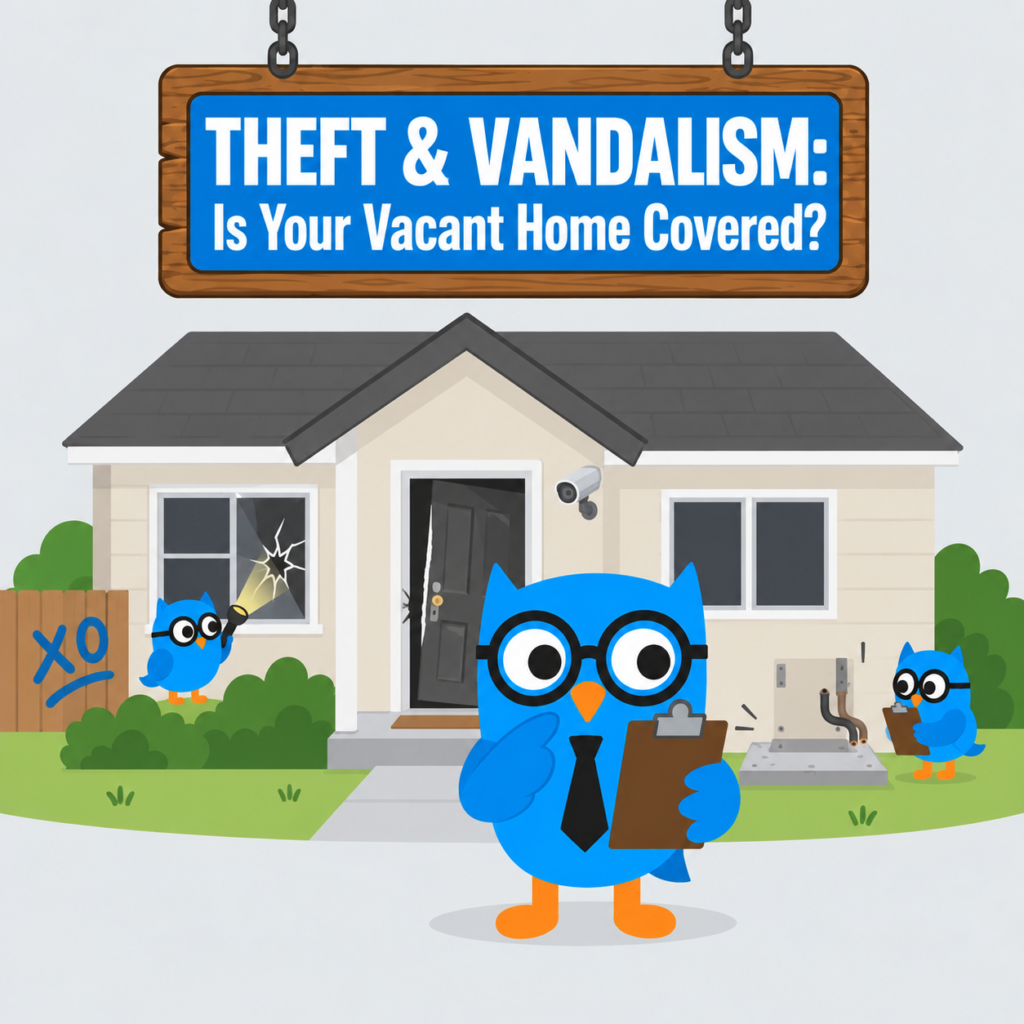
Does Vacant Home Insurance Cover Theft and Vandalism?
Mr. Hoots explains why empty properties can attract unwanted attention and what property owners should know about protecting a vacant home from theft and vandalism.
Hoo’s there? Mr. Hoots here, keeping watch when nobody else is home.
A vacant property can be quiet. Sometimes a little too quiet.
When a house sits empty, there may be nobody around to notice a broken window, missing appliance, damaged door, or unexpected visitor. That can make theft and vandalism two of the biggest concerns for owners of vacant homes.
But does vacant home insurance actually cover them?
The answer depends on the policy. Let’s take a closer look.
Why are vacant homes more vulnerable?
An occupied house usually has signs of everyday life. Cars come and go. Lights turn on. Packages disappear from the porch. Someone notices when something looks wrong.
A vacant home can be different.
Once it becomes obvious that nobody is regularly living there, the property may become more attractive to thieves, vandals, or trespassers.
Common problems can include:
- Stolen appliances or fixtures
- Copper wiring or plumbing theft
- Broken doors and windows
- Graffiti
- Intentional property damage
- Unauthorized entry
- Damage caused during a break-in
And because nobody is living there, the damage may not be discovered immediately.
Does vacant property insurance cover theft?
It can, but you should never assume theft is automatically included.
Vacant property policies vary by carrier and coverage form. Some may provide theft coverage, some may offer it as an optional protection, and others may restrict or exclude certain types of theft.
The details matter.
For example, coverage for damage caused while someone breaks into the property may not necessarily be treated the same way as coverage for the items they steal.
Hoot tip: Look beyond the word “theft.” Ask what property is covered, what types of loss are included, and what exclusions apply.
What about vandalism?
Vandalism may also be covered depending on the policy you purchase.
That can be especially important for a vacant home because intentional damage can become expensive quickly.
A broken window may lead to water entering the property. A damaged door can leave the home exposed to additional trespassers. What begins as a relatively small act of vandalism can create a much larger property loss if nobody discovers it.
This is one reason regularly inspecting a vacant property matters.
What if someone steals appliances or building materials?
Imagine buying an investment property that needs some work.
You install new appliances on Monday. When you return later, they’re gone.
Or maybe you’re renovating and materials are stored at the property when someone decides to help themselves.
Whether those items are covered depends on the policy, how the property is being used, where the items were located, and the specific coverage provided.
If you are renovating or storing valuable materials at a vacant property, tell your insurance professional exactly what is happening there.
What if the property is under renovation?
Renovation can change the risk considerably.
Tools, appliances, building materials, dumpsters, contractor vehicles, and partially completed work can make it obvious that a vacant property contains things worth stealing.
Major renovations can also create exposures that a basic vacant-property policy may not be designed to cover.
Before construction begins, make sure the insurance arrangement matches both the vacancy and the renovation activity taking place.
Security still matters
Insurance should not be the only thing protecting an empty property.
Simple precautions can make a vacant home less inviting and help you discover problems sooner:
- Secure every exterior door and window
- Replace damaged locks immediately
- Keep exterior lighting operational
- Maintain the lawn and landscaping
- Remove mail, flyers, and packages
- Consider cameras or monitored security
- Avoid leaving valuable items visible through windows
- Inspect the property regularly
- Have a local contact available when you cannot check the property yourself
The goal is simple: don’t make the house look forgotten.
What should you check before buying coverage?
Instead of asking only, “Does this policy cover theft?” look at the bigger picture.
Find out how the policy addresses theft, vandalism, malicious mischief, building materials, appliances, deductibles, coverage limits, and any conditions related to securing or inspecting the property.
Two vacant-home policies can have very different protections even if both are called “vacant property insurance.”
Price matters, but what you’re actually buying matters more.
Mr. Hoots’ Bottom Line
A vacant house may contain fewer belongings, but that does not mean there is nothing worth protecting.
Appliances, wiring, plumbing, fixtures, building materials, and the property itself can all become targets when nobody is around.
Vacant property insurance can provide important protection against theft and vandalism, but coverage varies. Know what your policy includes before somebody tests the locks for you.
Protect the Property. Protect the Investment. Because an empty house should never look like an open invitation.
-Mr. Hoots
Share this post.
Know someone with a vacant home, investment property, or fixer-upper? Send this their way before unwanted visitors find the property first.
Need vacant property coverage?
My Vacant Guard helps property owners find coverage designed for homes that are vacant, between occupants, awaiting sale, or undergoing eligible renovations.